Who Paris suits
Paris is a favourite with couples, especially on honeymoon, art and history lovers, families with school-age children and teenagers, and shoppers. The city works equally well for a packed sightseeing programme and for slow walks through its neighbourhoods with stops at cafés.
It is a common entry point to France and to Europe in general. Many travellers combine Paris with other capitals in one trip; such routes are described in our guide to sightseeing tours of Europe.
When to go
Spring, from April to June, is the best time: gardens are in bloom, the days are long and it is not yet hot. September and October are good too, with warm days and smaller crowds after the summer holidays.
July and August are peak season, with queues at the museums and occasional heatwaves, while many Parisians are on holiday and some local cafés close. Winter is cool and damp, but December, with its Christmas markets and lights, has its own charm.
Where to stay
Le Marais (3rd and 4th arrondissements)
A historic quarter of mansions, galleries, cafés and the Place des Vosges. Close to the Louvre, Notre-Dame and the Île de la Cité. Atmospheric and convenient.
Latin Quarter and Saint-Germain (5th and 6th)
The Left Bank of the Seine: the Sorbonne, the Luxembourg Gardens, bookshops and famous cafés. The Grand Mosque is here too. Great for exploring on foot.
Opéra and the Grands Boulevards (9th)
The Galeries Lafayette and Printemps department stores, the Palais Garnier and easy train connections to the airports. The choice for shoppers.
7th arrondissement
The area around the Eiffel Tower and Les Invalides. Calm and upmarket, quiet in the evening. Suits families and couples.
Montmartre (18th)
The artists’ hill with views over the city. Very picturesque, but the area around some metro stations can feel uneasy in the evening, and the stairs are tiring.
What to see
- The Louvre. A huge museum that could fill a whole day. Buy timed tickets in advance.
- Musée d’Orsay. The Impressionists in a former railway station.
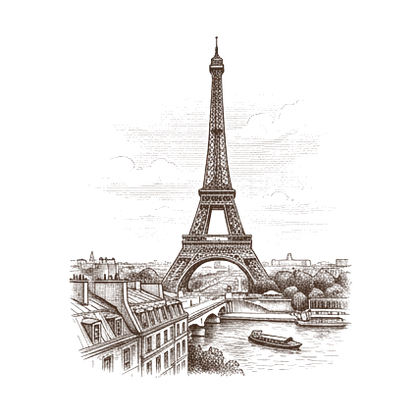
- The Eiffel Tower. Book the ascent in advance; in the evening the tower sparkles with lights every hour.
- Notre-Dame and the Île de la Cité. The cathedral is open to visitors again after restoration, and the stained glass of Sainte-Chapelle is nearby.
- Montmartre and Sacré-Cœur. The basilica on the hill and the artists’ square.
- The Champs-Élysées and the Arc de Triomphe with its viewing platform.
- A boat trip on the Seine, especially in the evening.
- Versailles. The palace and gardens, a full day.
- Disneyland: for families with children, another day.
How many days to plan
- 4–5 days: the main museums, the centre, Montmartre and Versailles.
- 7 days: add Disneyland, Giverny or the Loire Valley.
- 10–14 days: Paris plus another country, such as Spain with Barcelona, or Italy.
Good to know
The key step is the Schengen visa: start preparing early, especially before summer and the New Year holidays. Rules are given as of October 2026 and may change: check with our manager or the official embassy website before you travel.
Flights from Tashkent: our manager will find direct and connecting options. Pickpockets operate at popular sights and on the metro, so carry your bag in front of you and don’t leave your phone on a café table.
Hotel rooms in Paris are usually small, especially in older buildings, and the lifts are cramped. Many museums close on Mondays or Tuesdays, so check opening days.
Food in Paris
A Paris morning starts with a croissant from the bakery, and lunch with a set menu at a bistro, which is usually better value than dinner à la carte. Try French onion soup, duck confit, crème brûlée and macarons. Cheese and pastries are easy to buy at street markets held in different arrondissements on set days. Book a table for dinner at popular restaurants in advance; service is usually included in the bill, though leaving some change is up to you.
Let us plan your Paris trip
Send a request, message us on Telegram @GlobalDestination1 or call +998 99 760-82-88. Our manager will help with your visa documents, find flights and a hotel in a convenient arrondissement, and put together a day-by-day itinerary for your dates and budget.