Why go to Khiva
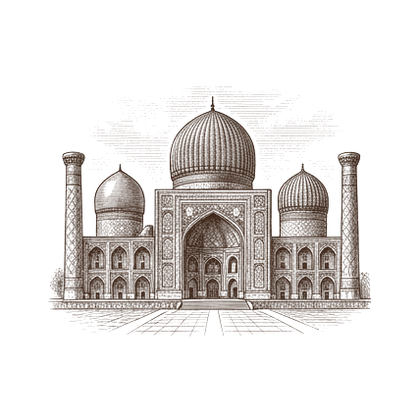
Khiva was the capital of a khanate in the Khorezm oasis, a green island between the Kyzylkum and Karakum deserts. Its inner town, Itchan Kala, was the first site in Uzbekistan to be listed by UNESCO. Within its walls you find more than fifty historic monuments, together with houses where people still live.
What makes Khiva special is its completeness. You do not visit individual buildings scattered across a modern city; you walk into a whole historic town and spend the day inside it.
What to see
Itchan Kala and its walls
Enter through the western gate and walk the main street towards the eastern gate, then explore the side lanes. Climb onto the walls near the northern gate in the late afternoon for a view over domes and minarets as the light turns golden.
Kalta Minor and Islam Khoja
The Kalta Minor is a thick, unfinished minaret covered in turquoise tiles, the symbol of the city. The tall, slender Islam Khoja minaret is the opposite, and you can climb it for the best panorama in town if you are comfortable with narrow stairs.
Juma mosque
The Friday mosque is a single large hall with more than two hundred carved wooden columns, some of them centuries old. Light falls through openings in the roof, and the effect is quiet and unusual.
Palaces of the khans
Tash-Hauli palace has courtyards lined with blue and white tiles and carved wooden pillars, including the former harem. The Kunya-Ark fortress was the khan’s residence and has a watchtower with views over the old town.
Desert fortresses
North of Khiva, across the Amu Darya, ancient Khorezm left a ring of mud-brick fortresses in the desert. Ayaz-Kala and Toprak-Kala are the most visited; a half-day trip with an overnight in a yurt camp near Ayaz-Kala is popular with photographers.
How many days
We suggest two nights in Khiva. Arrive in the afternoon, see the walls at sunset, spend the next day in Itchan Kala and use the following morning for the desert fortresses or an early walk before departure.
Best season
Spring and autumn are the best times. Summer is very hot, and winter days are cold, but the town is atmospheric under a clear winter sky and almost empty.
Getting there
Khiva lies about 30 kilometres from Urgench, which has an airport with domestic flights from Tashkent and a railway station. Rail services also reach Khiva. From Bukhara, travellers take the train or drive across the desert, which takes most of a day. Our team selects the route that fits your program and books tickets early.
Where it fits in a route
Khiva is usually the last stop of a classic route, after Samarkand and Bukhara, and many travellers fly back to Tashkent from Urgench. It also works as a starting point: from here you can head to Nukus and the Aral Sea region, or towards Kunya-Urgench in Turkmenistan. The Bukhara and Khiva program pairs the two desert cities with the fortresses.
Information checked in October 2026; entry rules change, so confirm with our team or the official embassy website before you travel.
Where to stay
Staying inside or right next to the walls makes early and late walks easy. Options range from small family hotels in old houses to larger hotels outside the gates. For groups, coach access outside the walls is easier.
Plan your Khiva visit
Send us your dates and the rest of your route. We build the program with guides, trains or flights, desert transfers and hotels, and send you a quote.