Who Rome suits
Rome is for lovers of history, art and Italian food. It draws couples, families with school-age children who are studying ancient Rome in class, and travellers discovering Italy for the first time. For Christian pilgrims the Vatican is a goal in itself; for everyone else it is one of the world’s greatest art collections.
This is not a city for lounging by the pool. You will walk a lot on cobblestones, climb hills and stand in museums, so young children tire quickly. Teenagers, on the other hand, often find the Colosseum and the Forum the highlight of the trip.
When to go
Spring and autumn are the best seasons: warm, long days and comfortable for walking. April, May, September and October are peak tourist months, but the weather is worth it.
Summer is very hot, especially in July and August, and in mid-August many Romans leave town and some small restaurants close. Winter is mild and rainy, with fewer tourists and shorter queues. The Vatican is especially crowded at Catholic Easter and Christmas.
Where to stay
Historic centre (Centro Storico)
Between the Pantheon, Piazza Navona and Trevi. Everything is within walking distance and the evenings are lively. Hotels are in old buildings and rooms are often small, but the location is the best.
Monti
A neighbourhood next to the Colosseum with vintage shops and trattorias. Handy metro station, good atmosphere and reasonably quiet at night.
Trastevere
A picturesque area across the Tiber with medieval lanes and restaurants. Very pretty, but noisy in the evening and without a metro; you get to the centre on foot or by tram.
Prati
The area by the Vatican: straight streets, shops and calm. Convenient if you plan an early entry to the Vatican Museums.
Around Termini station
Practical for train journeys and the airport express, with simpler hotels. The area itself is not the most pleasant for evening walks.
What to see
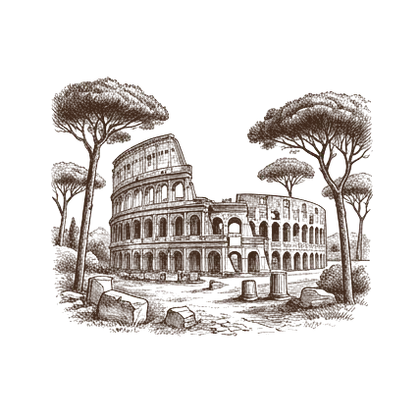
- The Colosseum, Roman Forum and Palatine Hill. One ticket covers the whole complex; allow half a day. Morning and evening are the best times.
- The Vatican Museums and the Sistine Chapel. A vast collection that needs 3–4 hours. St Peter’s Basilica has a dress code: shoulders and knees covered.
- The Pantheon. An ancient temple with an open dome.
- Trevi Fountain. Come early in the morning, as it gets very crowded during the day.
- Piazza Navona and the Spanish Steps.
- Galleria Borghese. Sculptures by Bernini and paintings by Caravaggio, entry strictly with pre-booked tickets.
- Trastevere: an evening stroll and dinner.
- The Appian Way: an ancient road with catacombs, best explored by bike.
Day trips
Tivoli with Villa d’Este and Hadrian’s Villa, Ostia Antica, and by high-speed train, Florence or Naples with Pompeii.
How many days to plan
- 3 days: the Colosseum and Forum, the Vatican and the centre.
- 4–5 days: add the Borghese, Trastevere and a day trip.
- 8–10 days: Rome, Florence, Venice and Milan. Such routes are collected in our guide to sightseeing tours of Europe.
Good to know
You need a Schengen visa. Rules are given as of October 2026 and may change: check with our manager or the official embassy website before you travel.
Flights from Tashkent: our manager will find direct and connecting options. Rome charges a city tourist tax, paid at the hotel. Pickpockets operate on crowded transport and at the main monuments.
Water from Rome’s public drinking fountains is clean, so you can refill your bottle. There are halal restaurants, mostly around Termini station and Esquilino.
Roman food
In Rome people eat pasta carbonara, cacio e pepe and amatriciana, Jewish-style artichokes and pizza by the slice sold by weight. Buy gelato from shops that keep it in covered metal tubs rather than piled high. Coffee at the bar counter costs less than at a table, and locals only drink cappuccino in the morning. Lunch in trattorias is usually from one to three and dinner after eight in the evening; many restaurants close in between.
Let us plan your Rome trip
Send a request, message us on Telegram @GlobalDestination1 or call +998 99 760-82-88. Our manager will prepare your visa documents, find flights, a hotel and tickets for the main museums, and if you like, build a route around Italy.